The Cemetery's history
Some sources state that the Jewish cemetery on the eastern approach to the city, i.e. at the place where it is still located today, existed as early as the first half of the 19th century. Since the number of Jews in Osijek was increasing, the Lower Town Jewish Religious Community asked the City Government on November 3, 1868, to cede another 481 m² of city land to the existing small Jewish cemetery in the Lower Town, as 26 families had already been living in the Lower Town area.
At the end of May 1869, a commission consisting of Nikola Živanović, the mayor, Aleksandar Lužinsky, the city surveyor, and city representatives Gjoko Mavrodić and Alojz Janković, visited the Lower Town cemetery. On behalf of the Lower Town Jewish Community, the municipal head David Herrmann and the deputy head Maksimilijan Schwartz were present at the commission’s survey. The request was positively resolved, but with the note that the specific land could be ceded to the Lower Town Jewish Community only after the expiration of the contract of Stjepan and Gjure Vlaškovac, who had been growing wheat on the acquired area.
The chevra kadisha in the Lower Town had certainly been operating since the establishment of the Lower Town Jewish Community in 1862. However, it was not until 1889 that the municipality submitted to the City for approval the rules of the Lower Town chevra kadisha, according to which the Lower Town Jewish Community and the Lower Town chevra kadisha were a single, indivisible religious and legal community. From this it follows that the members of the Lower Town chevra kadisha were Jews from the Lower Town and New Town areas, and those who paid direct “contributions” to the municipality for at least a quarter of a year. According to the Rules, the Lower Town chevra kadisha organized a service for the dead, various charitable actions, cared for the sick, and organized funerals for Jewish members of the Lower Town Community. The General Assembly was held every year in December, and it is known that the president in 1890 was Jakov Freund, but it is not known until when.
The Lower Town Jewish Community
In the second half of the 19th century, two Jewish religious communities operated in Osijek, one in the Upper Town and the other in the Lower Town. The Lower Town Jewish Community confirmed its Rules at an assembly convened on 8 September 1909. The Rules were approved on 5 November 1910, according to which the Lower Town Community retained its seat in the Lower Town and territorially encompassed Osijek’s Lower Town and New Town. Its organs were the main assembly, the community board, and the presidency.
The community board consisted of 6 councilors and 2 deputies. The presidency consisted of the president, deputy, and two members. All members of the community board were elected for a 6-year term, with half of them resigning every third year. The scope of the general assembly included the appointment and dismissal of the rabbi, disciplinary authority over the rabbi and cantor, the resolution of appeals against disciplinary decisions issued against community officials, rabbis and cantors, the resolution of complaints against the community board, the relocation or abolition of synagogues, the introduction of reforms in the existing service of worship, the acquisition of real estate, permits for the construction of enterprises, the election of the community board, the approval of the annual budget and changes to community rules. The general assembly was convened by the community head at least once a year, in its first half. The competence of the community board included the entire administration of religious and property affairs of the Community (care and maintenance of religious institutions and regulations, determining how these institutions are used, care for and supervision of regular religious instruction, supervision of confessional institutions, religious societies and religious foundations, election of members for election committees, management of property, approval of the annual budget, election of the presidency and others). The Presidency was the direct administrative and executive body of the community.
The community officials were the rabbi and his deputy, the cantor, the religious teacher, the secretary, the shochet, members of the supervisory bodies and other officials. Every male and female self-governing member of the Community who had a prescribed religious offering had the active right to vote for representation in the Community. Every male member of the Community could be elected to the Board. The rules were passed during Josip Kraus’s presidency over the Community (they were signed by Bela Herrmann, Ludwig Hirschfeld, Max Münster and Samuel Reinitz).
The Jewish religious community in the Lower Town independently elected Rabbi Arpad Hirschberger (1885–1943) on 30 July 1910. Until his arrival, the religious life of Lower Town was led by the Upper Town rabbi. A. Hirschberger worked as a rabbi for a very short time, because already in 1911/1912 he left for the Czech Republic, and the rabbinical duties were once again taken over by the Upper Town rabbi. Avram Majer Rubinstein served as cantor in the Lower Town municipality from the 1880s until his death in 1921. The reasons for Hirschberger’s departure from the position of Lower Town rabbi are not known.
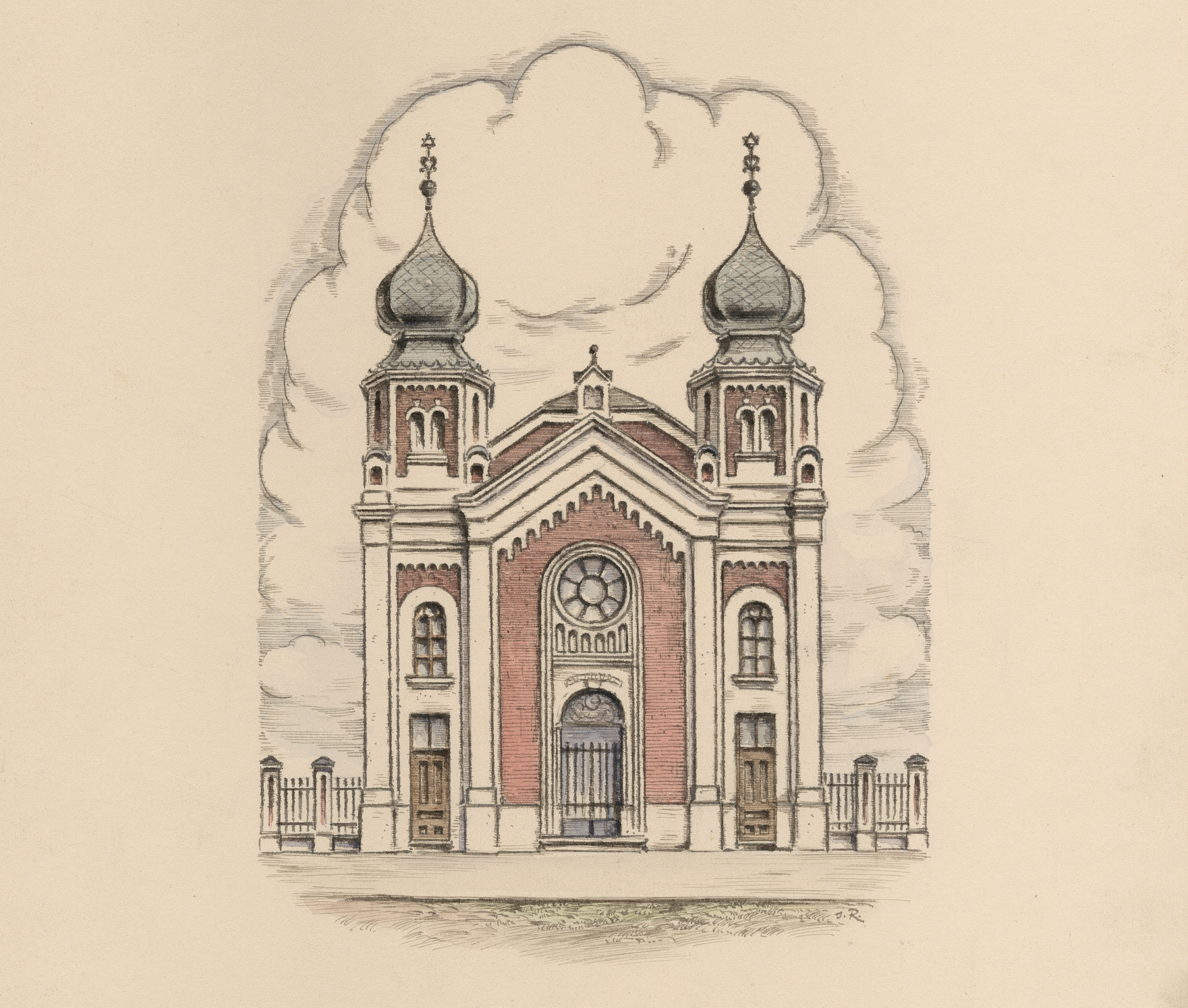
From 1901 to 1902, the Lower Town synagogue was under construction. The Lower Town Community, together with the Lower Town chevra kadisha, requested land for a synagogue between the artillery barracks, but not on the main street. At an extraordinary session of the City Council in November 1901, the proposal of the Jewish Community and the chevra kadisha in the Lower Town “to be given a city building site free of charge” for the construction of a synagogue “between the artillery barracks, and not towards the main street, which would spoil the beauty of the street”, was rejected, but the council, immediately after the session, concluded “that the city is prepared to give the religious community the sum of 1,000 K to acquire a more suitable building site elsewhere”, not far from the Hospital on the corner of Krstova Street, where the synagogue “could be built with its facade facing the park”. The proposal was accepted by both sides.
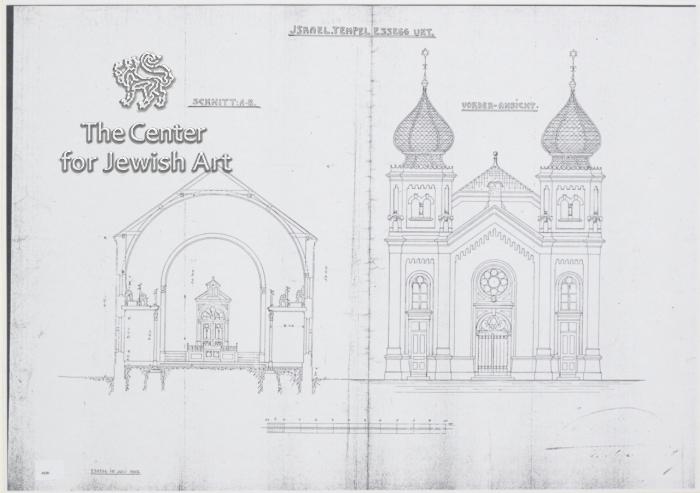
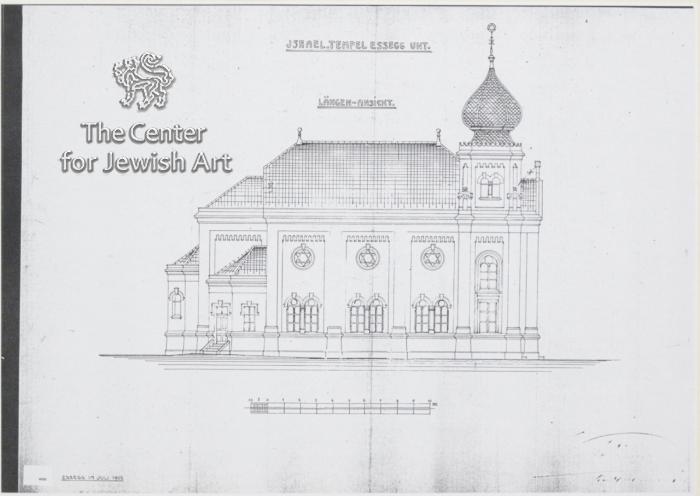
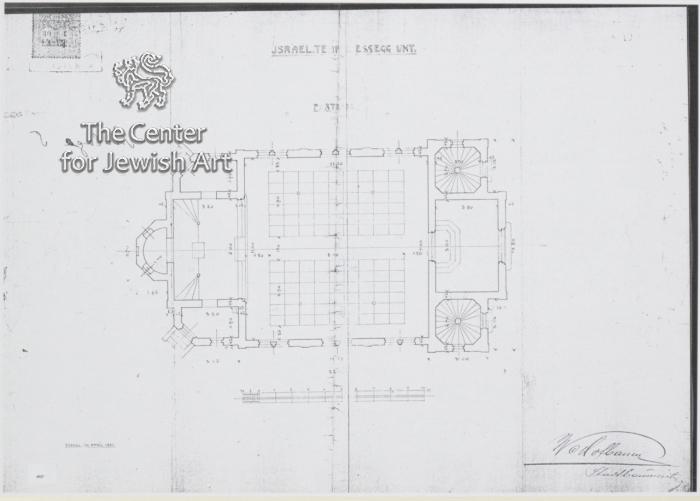
Despite financial difficulties, the main burden of raising money for the construction was borne by Oskar Kohlbach, head of the special committee for the construction of the Lower Town Temple. Thanks to him, the money was collected by June 1902, when, under the leadership of W.C. Hofbauer, the Lower Town Synagogue was built in the following 6 months. The Osijek architect teamed up with the famous Osijek brickyard owner Ignat Natan Schulhof, whose Hofbauer & Schulhof Company built the most representative buildings in the city on the Drava River in the late 19th and early 20th century. The patron of the construction of the Lower Town Synagogue was the People’s Representative Ivan pl. Adamović.
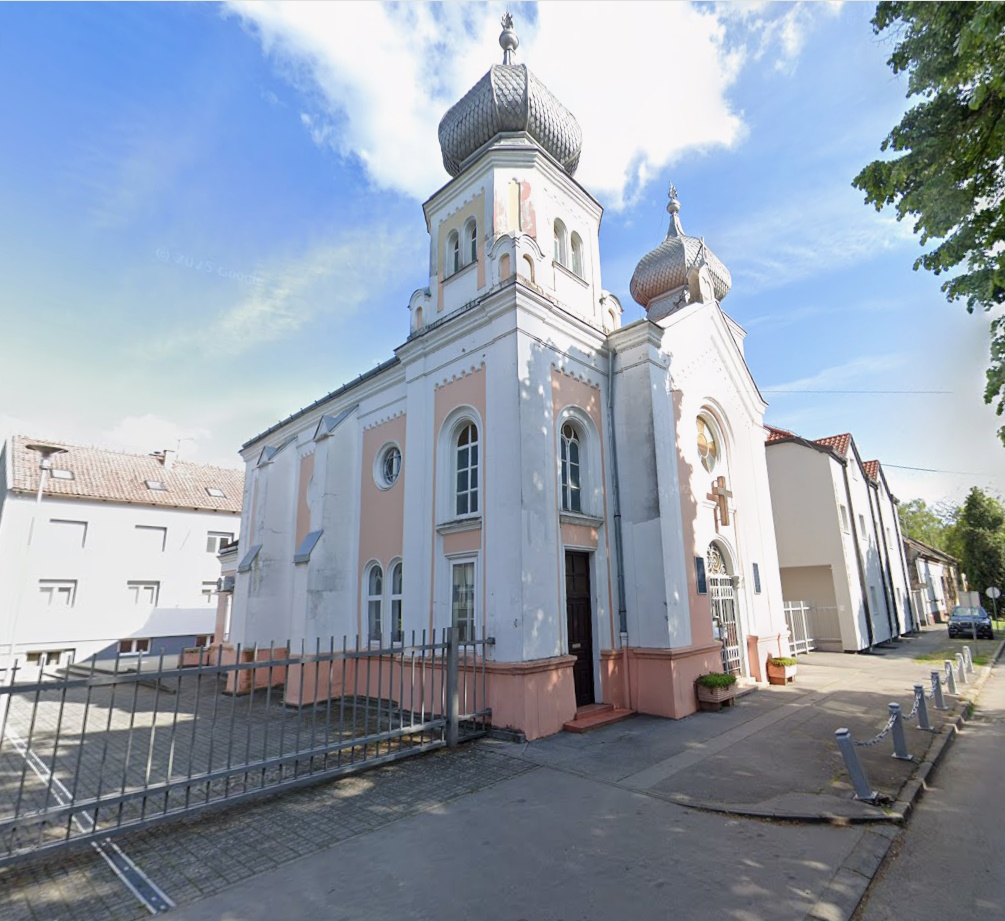
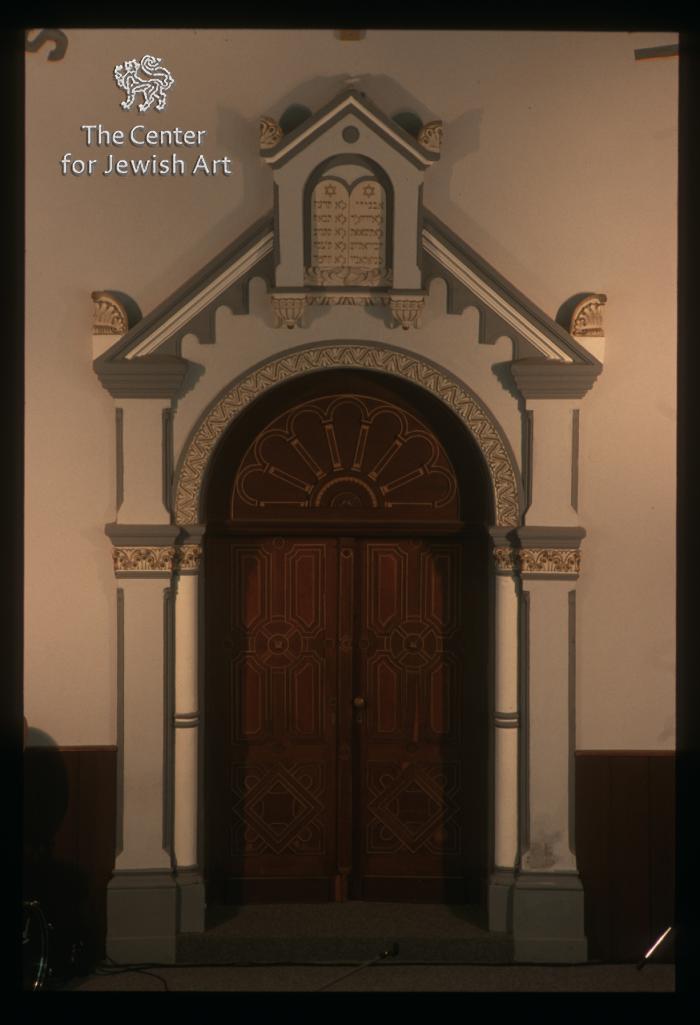
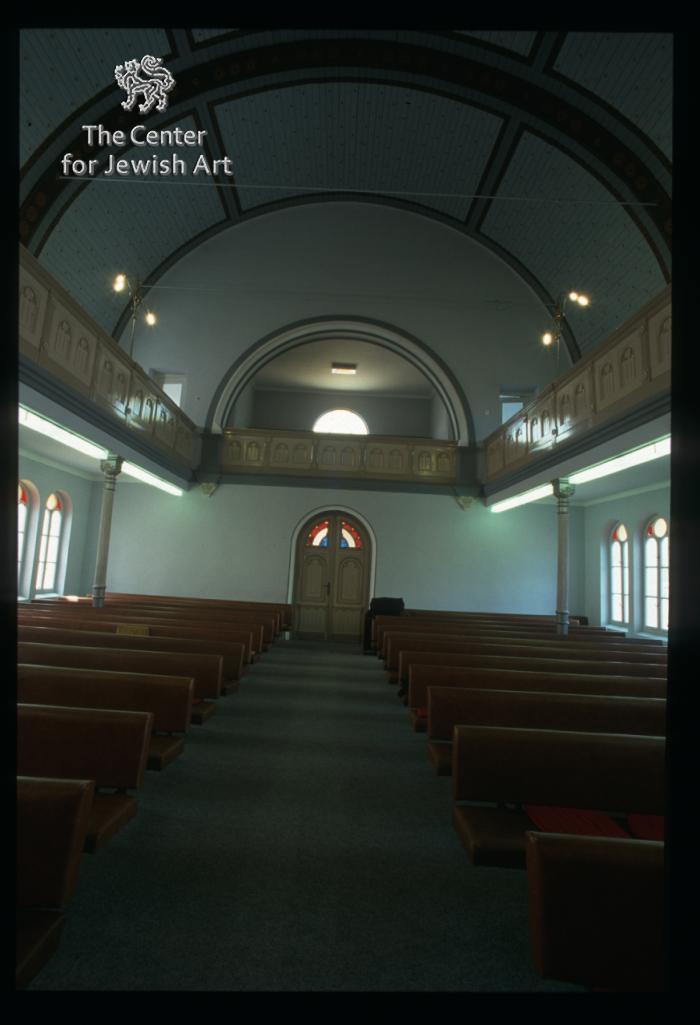
The foundation stone was laid in June 1902. The ceremony was attended by the heads of civil and military departments and numerous citizens. The opening speech was given by the head of the Lower Town Municipality J. Kellner, and the Lower Town Croatian Singing Society “Lipa” and the Upper Town Synagogue choir participated in the musical part of the ceremony. The synagogue was dedicated on December 28 of that year. The procession, consisting of the chief rabbi, cantors, municipal officials, various delegations and citizens, set off that day from the Upper Town synagogue to the Lower Town after the service, and then the Torah was transferred to the newly built synagogue. The final works took place during 1903. The synagogue belongs to the “Westwerk” type of synagogue with a pair of towers on the western facade, which some interpret as a form of assimilation attempt.
Today, the synagogue is one of few preserved in its original form, but repurposed. It was used as a synagogue until World War II and the establishment of the so-called Independent State of Croatia brought its devastation. Since the Community did not have enough funds for renovation, the Community’s administration decided in 1978 to sell the building to the Pentecostal Church, which renovated the building; today it is the Evangelical “Church of Good News” within the Evangelical-Theological Faculty at Cvjetkova Street 30 in Osijek.
Photographs and drawings
Sources
- Dobrovšak, Lj. Židovi u Osijeku od doseljavanja do kraja Prvoga svjetskog rata. Židovska općina Osijek, 2013.
- Center for Jewish Art, dostupno na https://cja.huji.ac.il
- Živaković-Kerže, Z. Židovi u Osijeku (1918. – 1941.). Židovska općina Osijek, 2005.
- Fišer, Darko. Židovi u Osijeku, u: Dva stoljeća povijesti i kulture Židova u Zagrebu i Hrvatskoj, Zagreb, 1998. Židovska općina Zagreb, 1998.